The Full Setup — How Six Pieces Become One AI System
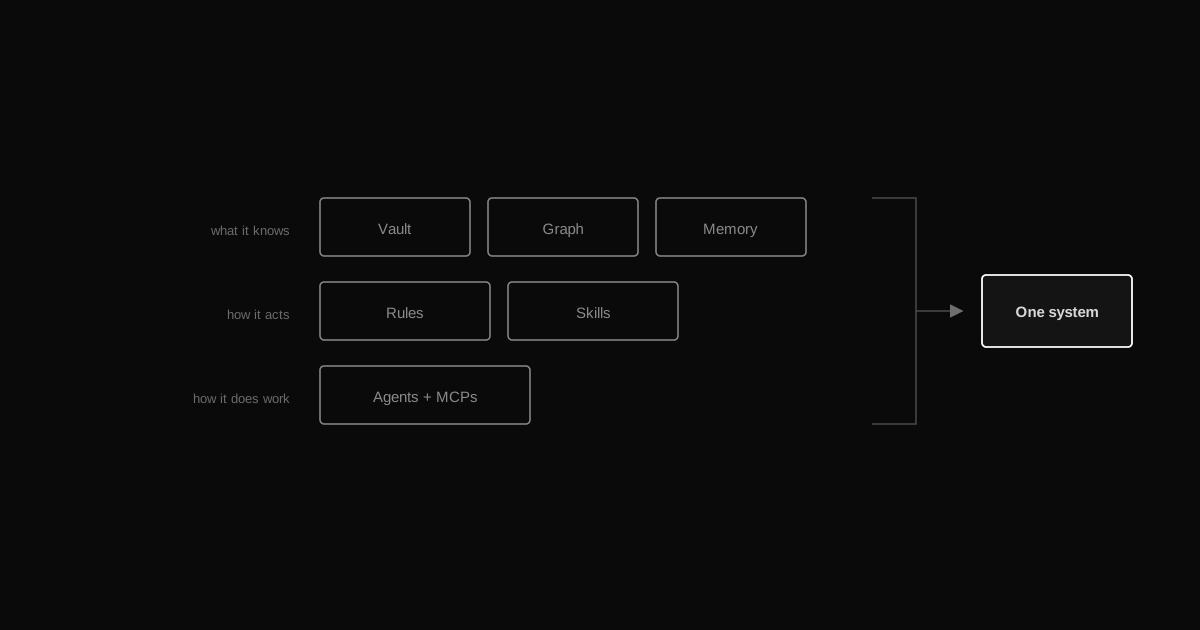
TL;DRThe vault, the graph, and memory are what your AI knows. Rules and skills are how it acts. Agents and MCPs are how it gets real work done in your real tools. Build them in that order and each layer makes the next one better — that's the whole setup.
…
Do I have to build all six pieces before this works?
No. Start with the vault alone and you already have something useful — that's episode 01, on its own. Every layer you add makes the last one work better, but nothing has to be finished before the next one starts.
What if I only have time for one or two pieces?
Do the vault and the rules file first. The vault gives your AI something to know; a rules file (CLAUDE.md or equivalent) gives it a way to act consistently. Those two alone change how every conversation with it goes.
Do I need Claude Code specifically, or does the whole stack work with any AI?
The pattern works with any AI that can read and write files and call tools. Claude is what I use and what these episodes show, but nothing here — files it reads, rules it follows, workflows it packages, tools it can call — is Claude-specific.
How long does the 'full setup' actually take?
A weekend gets you a solid first pass — the vault and the rules file are each a few hours, not days. After that it isn't a project you finish, it's a system you keep feeding, and it keeps getting better.
Seven episodes back I said: give your AI a folder it can read and write, and you've already changed the game. Everything since has been building on top of that one move. This is the finale — not a new trick, but the moment all six pieces click into one machine. Here's how they connect, and the order to build them in.
So what did the last seven episodes actually build?
Six pieces, in the order I built them:
A vault — notes your AI can read and write directly.
A graph — the links between those notes turned into something your AI can traverse, not just search.
Memory — a habit of writing back what it learns, so it doesn't start from zero every session.
Rules — a file your AI reads before it does anything, so it acts the same way every time.
Skills — your repeatable workflows packaged so your AI can run them on demand instead of you re-explaining them.
Agents and MCPs — ways to fan work out and plug your AI into your real tools, so it doesn't just talk about work, it does it.
Each one is useful alone. Stacked, they stop being six separate tricks.
How do six separate pieces become one system?
Group them into three layers and it clicks:
The brain — vault → graph → memory. This is what your AI knows: your notes, how they connect, and what it remembers about you across sessions.
The behavior — rules + skills. This is how it acts: consistently, your way, without you repeating yourself.
The hands — agents + MCPs. This is how it does real work, at scale, inside the tools you actually use.
A brain with no hands just talks. Hands with no brain just execute blindly. You need all three, and the order matters more than people think.
What order should you actually build this in?
The same order the episodes shipped in, because each piece needs the one before it:
You can't usefully package a "skill" if you don't yet have consistent rules for how you work. You can't fan work out to agents if there's no memory for them to read context from. Build bottom-up — brain first, then behavior, then hands — and every later piece has something solid to stand on.
How does each piece make the next one better?
This is the part that actually compounds:
Memory feeds the graph. Every session you save gets linked into what's already there, so the graph gets denser without you doing any manual filing.
The graph makes rules smarter. Rules stop being guesses about how you work and start being grounded in a real record of decisions you've already made.
Rules make skills reliable. A skill is just a rule that got specific and repeatable — it only works well once the underlying rules are solid.
Skills make agents worth fanning out. Handing a vague task to five agents in parallel is chaos; handing five agents the same packaged skill is scale.
Agents make MCPs worth wiring up. A tool connection is only as useful as the workflow that calls it — agents are what actually drive an MCP instead of you clicking through it by hand.
Each layer isn't just "more features." It's fuel for the layer above it.
How do you check what you've got and what's next?
You don't need a master plan — just ask your AI where you stand. Paste this:
Here's my setup so far: [list what you have — e.g. "a vault with linked notes","no memory habit yet", "one skill for my writing style", "no agents or MCPs"].Compare it to this order: vault -> graph -> memory -> rules -> skills -> agents -> MCPs.Tell me the ONE next piece to build, and give me a five-minute version of it.
That's it. Your AI tells you exactly where the gap is and hands you something small enough to actually finish today. You don't build all six pieces in a weekend — you build one, then let it tell you the next.
What do you actually get once it's wired?
Not a chatbot. A system:
It knows what you know — your notes, your decisions, the reasoning behind them, linked and searchable.
It acts the way you work — the same conventions and judgment calls every single time, because it reads the rules before it reads the task.
It does real work in your real tools — not "here's what you should do," but actually doing it, in the places you already work.
It gets better every session, on its own, because memory feeds the graph and the graph sharpens the rules.
That's the whole point of these seven episodes: not six separate tips, but one personal AI system you own, that compounds a little more every time you use it. You built the brain, you taught it your behavior, you gave it hands. From here it's yours to keep growing.
Next up in Phase 2: the real war stories — what actually breaks when you run a setup like this for real, and how to fix it before it costs you.
 AI FROM MY POV